
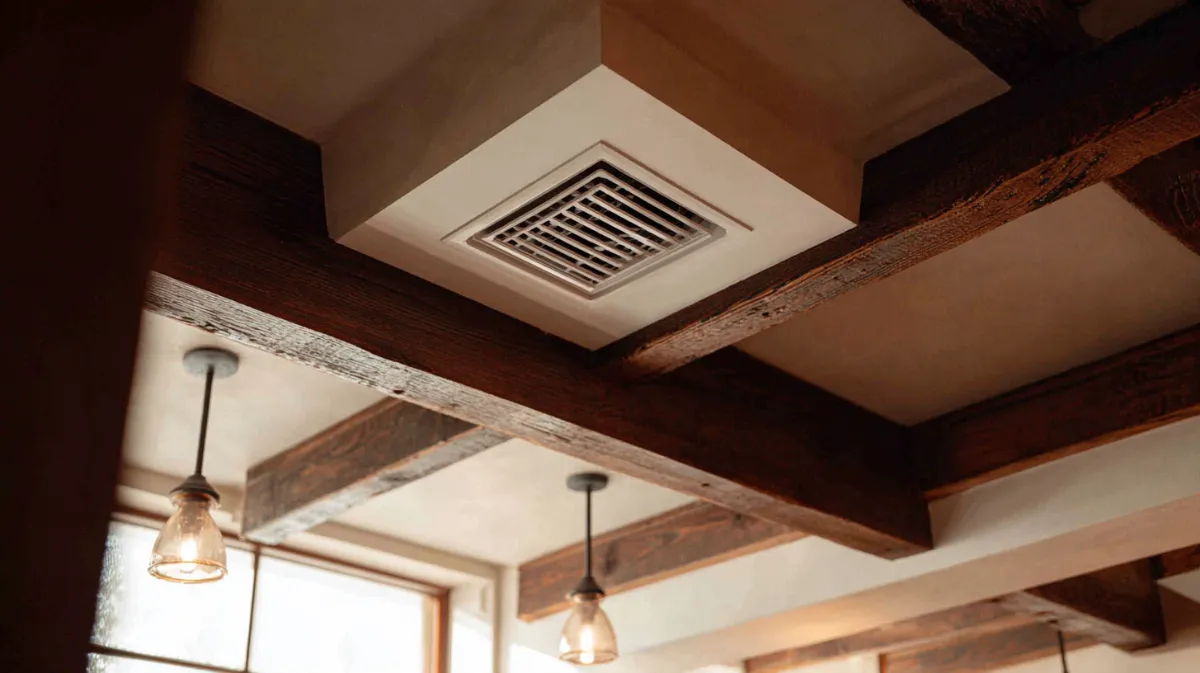
Nobody at work thinks about the ductwork until something makes them. An employee asks why there's black dust on her desk every Monday. A new tenant wants proof the system was cleaned after the last build-out. A customer in the tasting room looks up at a ceiling vent with a gray halo around it. Commercial buildings move far more air than houses do, through bigger ducts, for more hours a day, and their filters are often changed by whoever remembers. We clean systems in Petaluma, where many downtown shops sit in buildings more than a century old, and in Healdsburg, where a spotless room is part of what the visitor is paying for.
Below: the clues that a building needs cleaning, the ways commercial equipment differs from what's in a house, how a job is planned so you don't lose a business day and how often to look again. Smaller buildings often run on residential-style equipment, and for those our standard air duct cleaning will usually cover it.
Signs a Building Is Due
Look up first. Dark rings or streaks on ceiling tiles around the diffusers mean dust is riding out on the air. Check the return grilles for a fuzzy mat. Then listen to the people in the space. Complaints about stuffy afternoons, dust on desks or a musty smell on Monday mornings tend to cluster when a system is overdue. Recent construction is the other big trigger. A tenant improvement puts drywall dust into every open duct in the suite, and it will keep coming out for months unless it's removed. Water is the last one. A roof leak or a backed-up drain pan near the ductwork should always lead to an inspection.
Rooftop Units, Plenums and Lined Duct
Most commercial spaces are served by a packaged unit on the roof, which holds the fan, the coil and the filters in one box. Air comes down through a main duct and spreads out to the ceiling diffusers. The return air often has no duct at all. It drifts back through the open space above the ceiling tiles, called a plenum, so that whole cavity is part of the system. Many commercial ducts are also lined inside with fiberglass to deaden sound. That lining can't take a stiff brush, so it's cleaned with soft bristles and air tools, and replaced if it has started to shed. Our crews follow the NADCA standard for commercial systems, which covers each of these.
Planning the Job Around Your Hours
First comes a visit to the building and a look at the drawings if you have them. The quote is in writing and spells out the units, the square footage and the diffusers included, so there's no arguing about scope later. Then we schedule to suit the business. That usually means evenings or weekends for offices and shops, and early mornings for tasting rooms and cafes. Large buildings are done in sections over several nights. Desks, displays and equipment under the work area are covered with plastic. Any ceiling tile we lift is set back in its grid, and broken ones are flagged. Each morning the space is ready to open. At the end we hand over a photo report covering every unit and main duct.
How Often to Check Again
Have the system looked at once a year, and clean it when the inspection says so. For a typical office, that works out to a cleaning every three to five years. Buildings with more dust or more people need it sooner: workshops, salons, gyms, anything near a gravel lot or a vineyard road. Filter changes on a set calendar do the most to stretch the interval, and so does keeping the rooftop unit's access panels latched tight. Write the last cleaning date somewhere the next manager will find it. A surprising number of buildings have no record at all, and then the safest assumption is that it has never been done.
Buildings with shared laundry rooms have one more thing to keep up with, and our dryer vent cleaning handles those vents on the same trip.
Frequently Asked Questions
No. Grease hoods and their ducts over cooking equipment are a separate trade with its own fire code rules, and they should be cleaned by a hood specialist. We clean the heating and cooling ductwork that serves the dining room, offices and other spaces. If you run a restaurant, you likely need both, on different schedules, and we're glad to work around the hood company's visit.
By the amount of equipment and ductwork, how hard it is to reach and when the work has to happen. The main factors are the number of rooftop or indoor units, the count of supply diffusers and return grilles, the ceiling height and whether the ducts are lined. Night and weekend scheduling is normal for us and is built into the quote. You get one written number before we start.
A contact person with keys and alarm codes, roof access, and a heads-up to tenants or staff about the dates. Mechanical drawings help if they exist. It's also useful to know the building's history: when the units were installed, any past leaks and the date of the last tenant improvement. On the night, we need the system shut down at the thermostat or control panel while we work on it.